Discover the Benefits of Print on Demand for Your Business
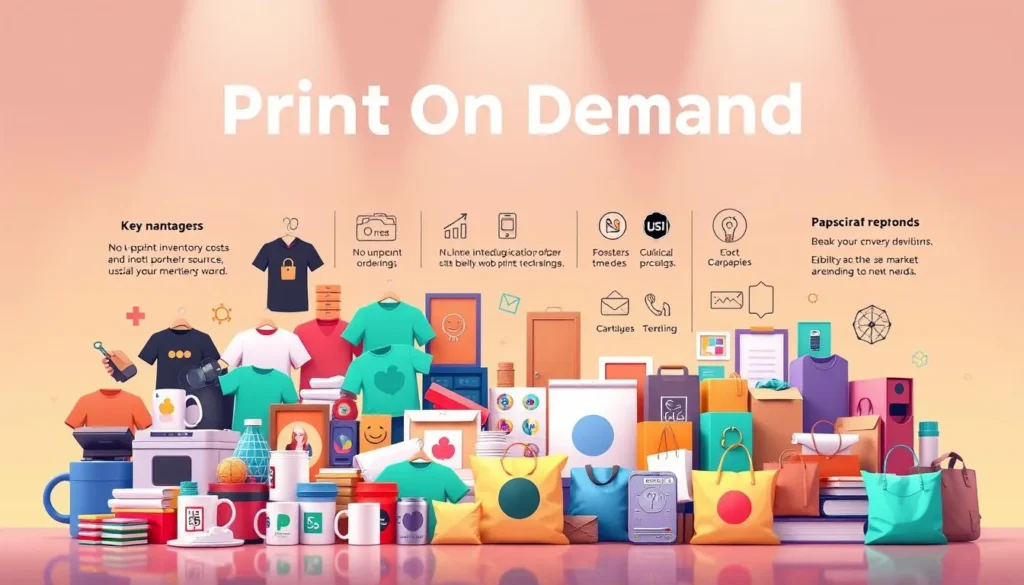
In today’s competitive market, businesses are constantly looking for innovative ways to stand out and grow. One effective strategy is leveraging custom printing and personalized merchandise through print on demand services.
This approach allows businesses to offer a wide range of products without holding inventory, reducing upfront costs and logistical hassles. By adopting print on demand, companies can focus on marketing and sales while their products are produced and shipped as orders are received.
Key Takeaways
- Reduce inventory costs with print on demand services.
- Offer a wide range of customizable products.
- Focus on marketing and sales while products are produced and shipped.
- Enhance customer satisfaction with personalized merchandise.
- Scale your business efficiently without logistical headaches.
What is Print on Demand?
Print on demand has revolutionized the way businesses approach product creation and distribution. This innovative approach allows companies to produce products only as they are ordered, eliminating the need for inventory storage.
Definition and Basic Concept
Print on demand, often abbreviated as POD, refers to a business model where products are manufactured and printed only when a customer places an order. This method utilizes digital printing technology to produce high-quality products on demand. The process begins with a customer ordering a product from an online store or platform. The order is then sent to a print on demand service provider, who produces and ships the product directly to the customer.
According to a report by Grand View Research, the global print on demand market size was valued at USD 6.4 billion in 2020 and is expected to grow at a compound annual growth rate (CAGR) of 25.4% from 2021 to 2028. This growth is driven by the increasing demand for customized products and the rise of e-commerce platforms.
How Print on Demand Differs from Traditional Printing
Traditional printing methods require businesses to print large quantities of products at once, which can lead to inventory waste and significant upfront costs. In contrast, print on demand services allow businesses to order products as needed, reducing waste and minimizing initial investment. The key differences between print on demand and traditional printing are highlighted in the table below.
| Characteristics | Print on Demand | Traditional Printing |
|---|---|---|
| Production Method | Digital printing, products made to order | Offset printing, large quantities produced at once |
| Inventory Management | No inventory needed, products shipped directly to customers | Requires inventory storage, businesses manage stock |
| Initial Investment | Minimal upfront costs, businesses pay per unit | Significant upfront costs for large print runs |
| Product Customization | Easy to offer customized products | Limited customization options for large print runs |
As noted by
“The print on demand industry is changing the way businesses operate, allowing them to be more agile and responsive to customer demands.” –
John Doe, Print on Demand Expert
The Evolution of Print on Demand Technology
The print on demand industry has undergone significant transformations since its inception. This evolution has been driven by advances in technology and changing consumer demands.
Historical Development
The concept of print on demand has its roots in the early digital printing technologies. Initially, the quality and variety of products were limited. However, as technology improved, so did the capabilities of print on demand services. Key milestones include the introduction of high-quality digital printers and advancements in software that enabled more efficient production processes.
Current State of the Industry
Today, the print on demand industry is characterized by its ability to produce a wide range of products with high quality and quick turnaround times. Innovations such as direct-to-garment printing and latex printing have expanded the possibilities for on-demand printing. The industry continues to evolve with advancements in technology, including AI and automation, which are streamlining production and enabling more personalized products.
The current state of the industry reflects a strong focus on sustainability and customer satisfaction, with many providers offering eco-friendly options and flexible production capabilities.
Understanding Print on Demand Benefits for Your Business
Print on demand has emerged as a game-changer for businesses, enabling them to produce products on demand, reduce waste, and increase profitability. This innovative approach to product sales offers numerous benefits that can enhance a business’s overall operations and competitiveness.
Minimal Upfront Investment
One of the primary advantages of print on demand is the minimal upfront investment required. Businesses can start selling products without having to purchase large quantities of inventory, thereby reducing their initial costs. This allows entrepreneurs to test new markets and products with minimal financial risk.
Zero Inventory Management
With print on demand, businesses do not need to manage inventory, as products are produced and shipped only when an order is received. This eliminates the need for storage space and reduces the administrative burden associated with inventory management. As a result, businesses can focus on marketing and sales.
Reduced Risk and Waste
Print on demand significantly reduces the risk of waste, as products are only produced when there is a confirmed order. This approach minimizes the likelihood of unsold products, thereby reducing waste and the environmental impact associated with excess production.
Scalability and Flexibility
Print on demand services offer businesses the scalability and flexibility they need to adapt to changing market conditions. As demand increases, businesses can easily scale their production without having to invest in new equipment or inventory. This flexibility enables businesses to respond quickly to changes in the market.
| Benefits | Description | Impact on Business |
|---|---|---|
| Minimal Upfront Investment | Reduced initial costs for inventory | Lower financial risk |
| Zero Inventory Management | No need for storage or inventory management | Increased operational efficiency |
| Reduced Risk and Waste | Products produced only on demand | Minimized waste and environmental impact |
| Scalability and Flexibility | EASY scaling of production | Improved responsiveness to market changes |
Popular Print on Demand Products
The world of print on demand offers a diverse range of products that cater to various customer preferences. This diversity is a key factor in the success of print on demand businesses, as it allows them to appeal to a broad customer base.
Apparel and Clothing
Apparel is one of the most popular categories in print on demand, with custom printing enabling the creation of unique and personalized clothing items. This category includes a wide range of products.
T-shirts and Hoodies
T-shirts and hoodies are among the top-selling apparel items in print on demand. They are popular for their comfort and versatility, making them ideal for personalized merchandise.
Custom Accessories
In addition to clothing, custom accessories such as hats and tote bags are also in high demand. These items allow customers to showcase their personal style with unique designs.
Home Decor and Accessories
Home decor and accessories are another significant category in print on demand. Products in this category enable customers to personalize their living spaces with custom designs.
Wall Art and Posters
Wall art and posters are popular choices for home decor, offering a way to add a personal touch to any room. They can feature a wide range of designs, from inspirational quotes to custom artwork.
Mugs and Household Items
Mugs and other household items, such as pillows and blankets, are also popular print on demand products. They make great gifts and are practical for everyday use.
Books and Publications
Books and publications represent a significant segment of the print on demand market. This category includes a variety of products, such as novels, cookbooks, and photo books.
As stated by a leading industry expert,
“The demand for customized books and publications is on the rise, driven by authors and creators looking for self-publishing options.”
Industry Expert
This trend highlights the importance of print on demand services in meeting the needs of authors and readers alike.
How Print on Demand Works
Understanding how print on demand works is crucial for businesses looking to capitalize on this growing market. The process involves several key steps and players that work together to bring customized products to customers.
The Print on Demand Process
The print on demand process begins with design creation. Sellers design their products using software or hire designers to create unique and appealing designs.
Design Creation and Upload
Once the designs are created, they are uploaded to the print on demand platform. This platform serves as a bridge between the seller and the producer, facilitating the production and shipping of products. Sellers can upload their designs to various product types, such as t-shirts, mugs, or phone cases.
Order Processing and Fulfillment
When a customer places an order, the print on demand platform processes the order and sends it to the production facility. The product is then produced and shipped directly to the customer, eliminating the need for inventory storage.
Key Players in the Supply Chain
The print on demand supply chain involves several key players. These include designers who create the designs, sellers who market and sell the products, print on demand platforms that facilitate the production and shipping, and production facilities that manufacture the products.
By understanding the roles of these players, businesses can better navigate the print on demand ecosystem and capitalize on its opportunities.
Top Print on Demand Services for American Businesses
For American businesses seeking to capitalize on the print on demand market, several key service providers stand out. These services offer a range of products and features that can help businesses succeed in the competitive e-commerce landscape.
Printful
Printful is a popular print on demand service that offers a wide range of products, including apparel, home decor, and accessories. With its user-friendly interface and competitive pricing, Printful is an attractive option for businesses of all sizes. Key features include fast shipping and a wide product range.
Printify
Printify is another well-known print on demand service that connects businesses with a network of print providers. This allows for flexible shipping options and a diverse product catalog. Printify is ideal for businesses looking for a straightforward integration process.
SPOD
SPOD (Spreadshirt POD) is a print on demand service that specializes in custom apparel and accessories. With its robust design tool and competitive pricing, SPOD is a great choice for businesses focused on fashion products.
Gooten
Gooten is a print on demand service that offers a wide range of products, including home decor, accessories, and packaging materials. Gooten’s platform is designed for businesses looking to create branded products without holding inventory.
Choosing the Right Provider
When selecting a print on demand service, American businesses should consider factors such as product range, pricing, shipping times, and integration with e-commerce platforms. By comparing these factors across different providers, businesses can make an informed decision that suits their needs.
| Service | Product Range | Shipping Time | Integration |
|---|---|---|---|
| Printful | Wide range of products | Fast shipping | Easy integration with major e-commerce platforms |
| Printify | Diverse product catalog | Variable shipping times | Straightforward integration process |
| SPOD | Custom apparel and accessories | Competitive shipping rates | Robust design tool |
| Gooten | Home decor, accessories, and packaging | Reasonable shipping times | User-friendly platform |
Setting Up Your Print on Demand Business
Establishing a successful print on demand business begins with understanding the fundamentals of the industry. This involves several key steps that can help you create a thriving online business.
Creating Designs That Sell
The first step in setting up your print on demand business is to create designs that appeal to your target audience. This requires understanding current trends, consumer preferences, and your niche market. Use design software like Adobe Illustrator or Canva to create unique and attractive designs. Consider hiring a designer if you lack the necessary skills.
Integrating with E-commerce Platforms
To sell your print on demand products, you need to integrate with e-commerce platforms. This allows you to reach a wider audience and manage your sales efficiently.
Shopify Integration
Shopify is a popular e-commerce platform that integrates well with print on demand services. You can easily connect your Shopify store to print on demand providers like Printful or Printify using their apps.
Etsy and Other Marketplaces
Etsy is another marketplace where you can sell your print on demand products. While Etsy has its own set of rules and guidelines, you can still integrate print on demand services with your Etsy shop using the right tools and providers.
Pricing Strategies
Pricing your products correctly is crucial for the success of your print on demand business. You need to balance your pricing to ensure you’re competitive while also making a profit. Consider factors like production costs, shipping, and your target profit margin when setting your prices.
| Factor | Consideration | Impact on Pricing |
|---|---|---|
| Production Costs | Costs associated with producing the product | Directly affects minimum price |
| Shipping | Costs of delivering the product to the customer | Adds to overall cost, may affect pricing strategy |
| Target Profit Margin | Desired profit percentage | Determines final selling price |
Marketing Your Print on Demand Products
Marketing your print on demand products effectively can significantly boost your sales and brand visibility. To achieve this, businesses must employ a multi-faceted marketing approach that includes social media strategies, content marketing, and leveraging influencers and partnerships.
Social Media Strategies
Social media platforms are crucial for reaching potential customers. Creating engaging content and utilizing paid advertising on platforms like Facebook and Instagram can help increase brand awareness. Businesses should also leverage user-generated content by encouraging customers to share photos of their purchases.
- Identify your target audience
- Create content that resonates with your audience
- Use relevant hashtags to increase visibility
Content Marketing for Print on Demand
Content marketing involves creating valuable content to attract and retain customers. For print on demand businesses, this could mean blogging about design trends, DIY tutorials, or behind-the-scenes stories. This not only helps in SEO but also establishes the brand as an authority in the industry.
| Content Type | Purpose | Example |
|---|---|---|
| Blog Posts | Establish authority and improve SEO | “The Ultimate Guide to Print on Demand Design” |
| Videos | Engage audience and showcase products | “Designing a T-Shirt with Print on Demand” |
Leveraging Influencers and Partnerships
Influencer marketing can be a powerful tool for print on demand businesses. By partnering with influencers who have a following that aligns with your brand, you can reach new audiences. Additionally, collaborating with other businesses or artists can lead to unique product offerings and mutually beneficial marketing opportunities.
Success Stories: Businesses Thriving with Print on Demand
Many entrepreneurs have found success with print on demand, turning their ideas into thriving businesses. The flexibility and minimal upfront costs of print on demand services have made it an attractive option for businesses of all sizes.
Small Business Case Study
A small business owner, Jane, started her print on demand journey by selling custom t-shirts online. Using a print on demand service, she was able to offer a wide range of designs without holding any inventory. Within a few months, her sales increased significantly, allowing her to expand her product line to include home decor items and accessories.
Jane’s success can be attributed to her ability to quickly adapt to market trends and her effective use of social media marketing. By leveraging print on demand, she was able to focus on growing her business rather than managing inventory.
Scaling from Side Hustle to Full-Time Business
For many entrepreneurs, print on demand has been a pathway to turning their side hustles into full-time businesses. John, a freelance graphic designer, started selling his designs on print on demand products as a way to earn extra income. As his sales grew, he was able to scale his business, eventually leaving his full-time job to focus on his print on demand venture.
John’s story is a testament to the potential of print on demand to support business growth. By utilizing a print on demand service, he was able to minimize his upfront costs and maximize his profits, allowing him to scale his business efficiently.
Conclusion
As we’ve explored throughout this article, print on demand offers a transformative opportunity for businesses to thrive in a competitive market. By leveraging this technology, companies can enjoy numerous business benefits, including minimal upfront investment, zero inventory management, and reduced risk.
The flexibility and scalability of print on demand services enable businesses to adapt quickly to changing market demands, ensuring they stay ahead of the curve. With a wide range of products available, from apparel to home decor, businesses can diversify their offerings and cater to various customer needs.
In conclusion, embracing print on demand can be a game-changer for businesses looking to innovate and expand their product lines. By understanding the benefits and workings of print on demand, businesses can unlock new revenue streams and achieve sustainable growth.
FAQ
What is print on demand, and how does it work?
Print on demand is a production method where products are created only when an order is received. This means that businesses don’t have to hold any inventory, reducing upfront costs and minimizing waste. With print on demand services, designs are uploaded to a platform, and products are produced and shipped directly to customers.
What are the benefits of using print on demand services for my business?
The benefits of using print on demand services include minimal upfront investment, zero inventory management, reduced risk and waste, and scalability and flexibility. This allows businesses to focus on marketing and sales, while the print on demand service handles production and shipping.
What types of products can I create with print on demand?
With print on demand, you can create a wide range of products, including apparel, home decor, and books. Popular products include t-shirts, hoodies, wall art, posters, mugs, and household items. You can also create custom accessories, such as phone cases and tote bags.
How do I get started with print on demand?
To get started with print on demand, you’ll need to choose a provider, create your designs, and integrate with an e-commerce platform. Most print on demand services offer easy-to-use interfaces and integrations with popular platforms like Shopify and Etsy.
How do I market my print on demand products?
To market your print on demand products, you can use social media strategies, content marketing, and influencer partnerships. You can also leverage email marketing and paid advertising to reach your target audience.
Can I use print on demand for my existing online store?
Yes, most print on demand services offer integrations with popular e-commerce platforms, making it easy to add print on demand products to your existing online store.
How do I choose the right print on demand provider for my business?
When choosing a print on demand provider, consider factors such as product offerings, pricing, shipping times, and customer service. You should also look for providers that offer high-quality products and reliable fulfillment.
What is digital printing, and how is it used in print on demand?
Digital printing is a method of printing that uses digital technology to produce high-quality images and text. In print on demand, digital printing is used to produce products quickly and efficiently, without the need for large print runs.
Can I use drop shipping with print on demand?
Yes, many print on demand services offer drop shipping, which allows you to ship products directly to customers without holding any inventory.
How does online printing work with print on demand?
Online printing is a key component of print on demand, allowing businesses to upload designs and produce products online. With print on demand, online printing is used to produce products on demand, reducing waste and minimizing upfront costs.